

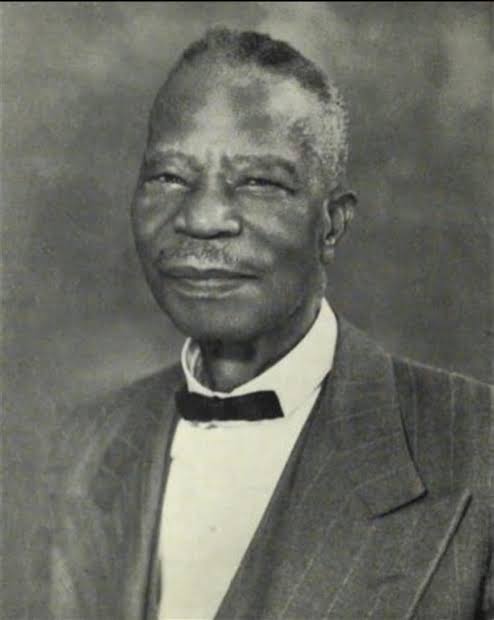
In Loving Memory
Charles Harrison Mason Sr.
"Charles Harrison Mason was a pioneering religious leader whose experience at the Azusa Street Revival deeply changed him and reshaped the Church of God in Christ, which he had already founded. Inspire…"
Life Story
Honoring Their Path
Charles Harrison Mason was a pioneering religious leader whose experience at the Azusa Street Revival deeply changed him and reshaped the Church of God in Christ, which he had already founded. Inspired by this spiritual awakening, he reorganized his existing Holiness movement into a vibrant Pentecostal denomination that welcomed people of all races. Serving as Senior Bishop for decades, he expanded the church across the nation and built a powerful spiritual network. Mason also promoted peace and championed social uplift during deeply segregated times. By the time of his death in 1961, he had transformed a modest fellowship into a major international movement. Today, his legacy endures through millions of global members and his lasting influence on modern Pentecostal worship and gospel music.
Life Chapters
The Chapters of Their Story
Faith & Religious Life
FreeCharles grew up in the Missionary Baptist church and joined it in Shelby County. In November 1878, or in September 1880 by other records, his older half-brother, the Reverend Israel S. Nelson, baptized him. After he got well from a bad illness in September 1880, he took a local preaching license from the Mount Gale Missionary Baptist Church in Preston, Arkansas, in 1893. He came to believe in justification and in a second work of grace called sanctification. To him, sanctification meant living clean and free of sin and staying away from worldly habits. He fasted hard and prayed for long stretches, sure that power came only through self-denial and obedience to Scripture. He believed God still healed bodies and did miracles just as in Bible times. He read the New Testament as a promise, not just a history lesson. He gave his time to prayer and kept one plain rule: no compromise, no shortcuts around the Bible. Still, something was missing, and he was hungry for the power he read about. Years later he told his family and church that "he believed God had healed him for the express purpose of alerting him to his spiritual duty." Looking back at that hunger, he wrote, "Then I felt I had gone to the end of myself." He held the Bible to be true and enough, and he checked every sermon he heard against it. He believed sin itself could be cleaned out of a person in this life, not just forgiven. He taught that holiness had to show, in clothes, in speech, in money, and in appetite. He would not touch tobacco or liquor, and he asked the people he converted to do the same. He fasted every week and prayed late into the night as a habit, not as an emergency. He put his hands on the sick and poured oil on them, expecting an answer. He was sure a church should look like the church in Acts, carrying power and not just preaching. Anything less than that power he called a compromise. In March 1907 Charles rode a train to Los Angeles and walked into the Azusa Street mission, where the Reverend William J. Seymour was preaching. The room was crowded and loud with praying, singing, and tongues, Black and white together, and he sat still and watched. He heard Seymour preach on sanctification and the Holy Spirit, and the sermon broke him open. He went forward, took a seat at the altar, and turned his back on the crowd. He confessed an old unsettled thing to a woman in the room and prayed it out. A minister wanted to argue with him, and Charles told him plainly that he "did not know what he wanted, and I knew what I needed." He would not be pulled away, and he said, "You all may stand on your heads, God has told me what to do. God is going to baptize me." In prayer he saw himself holding a dry roll of paper that he had to chew and swallow, and he understood that God was handing him the whole Book, on one condition: keep your eyes on God and not on people. On the third night a wave of glory filled him, a light brighter than the sun wrapped him, a flame seemed to touch his tongue, and he sang and spoke in a language he had never learned. Charles left Los Angeles and went straight back to Memphis, sure that tongues was the Bible's proof of the baptism. He preached it as essential, not as an optional blessing. He preached it to his own Holiness friends first, and they called it a delusion and cut him off. In late 1907 he called a meeting in Memphis for every minister who believed in the Pentecostal baptism, and twelve men came. That meeting reorganized the Church of God in Christ as a Pentecostal church and named him Chief Apostle and General Overseer. He began ordaining ministers from all over the country who had the same experience, and he laid hands on seekers so they could receive the Spirit too. He made the mixed-race altar at Azusa the permanent pattern of his church and kept a place at it for every color of person. He kept foot washing, fervent prayer, and healing, and by that work the Church of God in Christ became and stayed a Pentecostal church.
Final Years & Passing
FreeCharles spent his last years still leading a church that had grown far beyond Memphis. In the final two decades of his life he traveled overseas to cheer believers on and hold the mission work together. He went to Haiti, Jamaica, Great Britain, Holland, France, and Israel. In 1952 he went to London with church leaders for the World Pentecostal Conference. He was in his eighties and did not slow down. He knew he needed help running things as he aged, so he set up the Executive Commission of Bishops in 1951 and 1952 to keep the church steady. Even in his nineties he kept praying and still came to services. He sat in a chair on the pulpit and prayed for the people in the seats. One church member remembered him there, praying "under the anointed of the Holy Ghost." He did not need much for himself, and he went wherever he was sent. He said, "I care not where I perform his work, nor how hard it be." When he wrote the front of his life story, he asked only that it help somebody else along the road. He hoped it would "serve to give them a greater religious zeal" and help them "more patiently consider and bear the burdens of a Christian life." In November 1961 he was in Detroit, Michigan, during the church's yearly gathering season, and his health gave out. He went into Harper Hospital. He died there quietly on November 17, 1961, at ninety-seven. He had led the church for fifty-four years and had outlived almost every man who started beside him. His body was carried back to Memphis, the city where he had built everything.
Childhood & Early Life
StandardAvailable with Standard membership
Academic & Education
StandardAvailable with Standard membership
Marriage & Family
StandardAvailable with Standard membership
Achievements & Career
StandardAvailable with Standard membership
Social & Community Life
StandardAvailable with Standard membership
Artistic & Creative Life
StandardAvailable with Standard membership
Ancestry & Heritage
PremiumAvailable with Premium membership
Political & Civic Life
PremiumAvailable with Premium membership
Trials & Resilience
PremiumAvailable with Premium membership
Private Life & Reflections
PremiumAvailable with Premium membership
Offspring & Legacy
PremiumAvailable with Premium membership
Funeral & Memorial Service
PremiumAvailable with Premium membership
Tributes & Remembrances
PremiumAvailable with Premium membership
Life story chaptersStandard+
Unlock all life chapters, the full photo gallery, ancestry tree, and more.
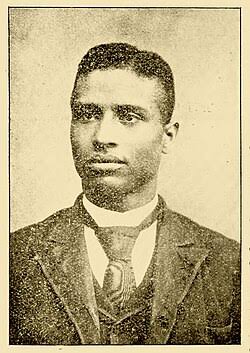
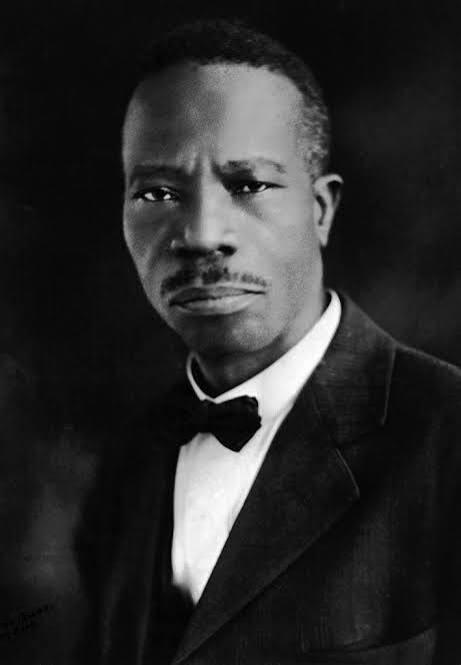
Photo Gallery
Burial location
Unlock with StandardShare This Memorial
Help others find and honor Charles's memory.
Honor with a Keepsake
Looking for a tangible way to remember Charles? Always In Mind Gifts offers personalized keepsakes, jewelry, urns, and memorial décor — for people and beloved pets.
Browse Memorial Gifts →Tributes & Condolences
Honor Charles
Leave a tribute — a candle, a condolence, or a cherished memory.