

In Loving Memory
Charles Fox Parham
"Charles Fox Parham spent his whole life chasing one idea: that God still moved among ordinary people. Poor and sickly on the Kansas prairie, he never finished college, yet he gave his life to travelin…"
Life Story
Honoring Their Path
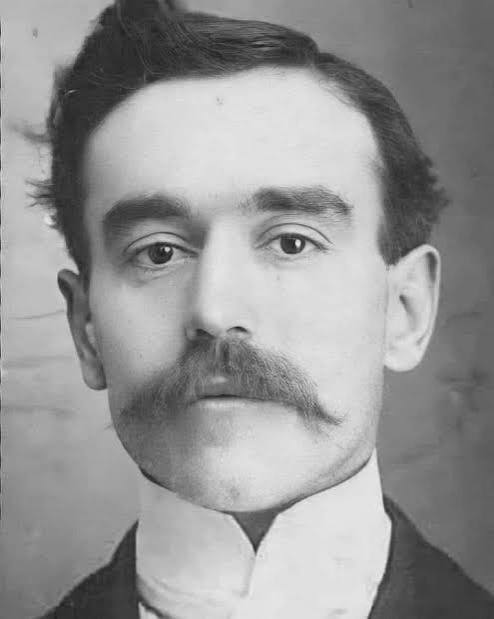
Charles Fox Parham spent his whole life chasing one idea: that God still moved among ordinary people. Poor and sickly on the Kansas prairie, he never finished college, yet he gave his life to traveling and preaching across America. His dynamic ministry brought new spiritual practices to common people and helped build the foundations of the early Pentecostal faith. He drew everyday seekers into unconventional Bible schools he founded himself, teaching thousands to read Scripture for themselves. In 1901 his students spoke in tongues, and the modern Pentecostal movement was born. He died at fifty-five in a small Kansas town, leaving behind a movement of hundreds of millions who mostly never learned his name.
Life Chapters
The Chapters of Their Story
Faith & Religious Life
FreeCharles built his entire theology around one conviction: that the Holy Spirit was still active in the present tense, and that healing and speaking in other tongues were live signs of full salvation rather than closed chapters of the apostolic age. He held sanctification to be a distinct second work of grace, treated denominational membership as a matter of near indifference, and pressed hardest of all on a single point, that tongues were the physical proof of the baptism in the Holy Ghost. That claim was not handed to him by a book. In December of 1900 he gave the students at his Bethel Bible College in Topeka a research assignment and then left town, asking them to comb the book of Acts and report what actually happened whenever the Spirit came down. Their answer came back unanimous, and it rearranged his life. On the last night of the century a student named Agnes Ozman asked him to lay hands on her, and he did it hesitantly, having never had the experience himself. "I had scarcely repeated three dozen sentences when a glory fell upon her, a halo seemed to surround her head and face, and she began speaking in the Chinese language, and was unable to speak English for three days." The students had already been keeping three-hour watches of prayer around the clock in the tower, and within days roughly half of them had followed her. On January 3, 1901, Charles came back from a service to a prayer room making sounds he could hear from the walk. "The room was filled with a sheen of white light above the brightness of the lamps." Twelve ordained ministers from other denominations were in the room speaking in tongues, some of them shaking gently, and an elderly woman named Sister Stanley told him she had just watched tongues of fire settle over their heads. He got down behind a table where nobody would see him. "I fell to my knees behind a table unnoticed by those on whom the power of Pentecost had fallen to pour out my heart to God in thanksgiving." Then he asked for the same thing himself, and his own turn came. "Right then and there came a slight twist in my throat, a glory fell over me and I began to worship God in a Swedish tongue, which later changed to other languages and continued so until the morning." Reporters, language professors, and government interpreters descended on the house and put the students to a hard test, and the papers ran the word "Pentecost! Pentecost!" on the street. He never treated any of it as a private treasure. He read the outbreak through the "Latter Rain" teaching he had picked up from other holiness groups, convinced that God was restoring Pentecostal power for one last worldwide harvest of souls before Christ returned, and that the gift of languages was practical equipment for missionaries who would not have time to study. In his doctrinal work, "A Voice Crying in the Wilderness," Charles laid out his understanding of direct spiritual endowment without decoration: "The baptism of the Holy Ghost is the enduement with power from on high." He was equally flat about continuity, writing later in the same book: "We contend that the real baptism of the Holy Ghost is the same today as on the day of Pentecost." That certainty had been slow in coming. After a long tour of other holiness communities he came home more convinced than ever that something was still missing: "I returned home, fully convinced that while many had obtained real experience in sanctification and the anointing that abideth, there still remained a great outpouring of power for the Christians who were to close this age." When it finally reached him, what he felt was not triumph but thanks: "My heart was melted in gratitude to God for my eyes had seen." To the end of his life he insisted that Topeka was not his accomplishment, only a trust he had been given and told not to drop.
Final Years & Passing
FreeCharles spent his last two years knowing the machine was winding down and traveling anyway. He had gone to Palestine in 1927, and he came home with a lantern slide lecture on "The 23rd Psalm" that he showed in churches all over the Plains. In 1928 he ran a two-week camp meeting at Baxter Springs that filled the tent, and toward the close of it he told a brother, almost in passing, that his work was nearly over. He went on into Oklahoma, Texas, Colorado, and New Mexico, and somewhere in that stretch he picked up a deep cold that would not clear. Preaching in Wichita, he gave the congregation fair warning: "Now don't be surprised if I slip away, and go almost anytime, there seems such a thin veil between." A letter he wrote about the same time said it even more openly: "I am living on the edge of the Glory Land these days and it's all so real on the other side of the curtain that I feel mightily tempted to cross over." He put it a third way to his family, saying that he was living "on the borderland of two worlds." Christmas of 1928 was spent at home, crowded in with children and grandchildren. He had a booking in Temple, Texas, to preach and to show the slides, and though he was plainly failing he would not cancel it, so on January 2 he left with two other brothers. On the night of January 5, in the middle of the meeting, he went down while his pictures were still on the screen. Sarah and several of the family took the next train south, found him with a bad heart and no appetite, and over his objections ended the tour. They carried him back to Kansas by rail. He would not take medicine. He asked for prayer instead, and prayer was what he got. Robert quit his job to fast and pray over him, and the house filled with children rotating through the bedroom in shifts. The thing that pleased him most in those days was Robert telling him he had given his life to the ministry. Through the nights he kept saying, "Peace, peace, like a river. That is what I have been thinking of all day." He sang a line or two of "There is Power in the Blood," asked the family to carry it for him, and when they had finished asked them to sing it again. He was unconscious for part of it and lucid for part of it, and he died in the afternoon of January 29, 1929, his overworked heart finally giving out, a smile on his face.
Childhood & Early Life
StandardAvailable with Standard membership
Academic & Education
StandardAvailable with Standard membership
Marriage & Family
StandardAvailable with Standard membership
Achievements & Career
StandardAvailable with Standard membership
Social & Community Life
StandardAvailable with Standard membership
Artistic & Creative Life
StandardAvailable with Standard membership
Ancestry & Heritage
PremiumAvailable with Premium membership
Political & Civic Life
PremiumAvailable with Premium membership
Trials & Resilience
PremiumAvailable with Premium membership
Private Life & Reflections
PremiumAvailable with Premium membership
Offspring & Legacy
PremiumAvailable with Premium membership
Funeral & Memorial Service
PremiumAvailable with Premium membership
Tributes & Remembrances
PremiumAvailable with Premium membership
Life story chaptersStandard+
Unlock all life chapters, the full photo gallery, ancestry tree, and more.
Photo Gallery
Burial location
Unlock with StandardShare This Memorial
Help others find and honor Charles's memory.
Honor with a Keepsake
Looking for a tangible way to remember Charles? Always In Mind Gifts offers personalized keepsakes, jewelry, urns, and memorial décor — for people and beloved pets.
Browse Memorial Gifts →Tributes & Condolences
Honor Charles
Leave a tribute — a candle, a condolence, or a cherished memory.