

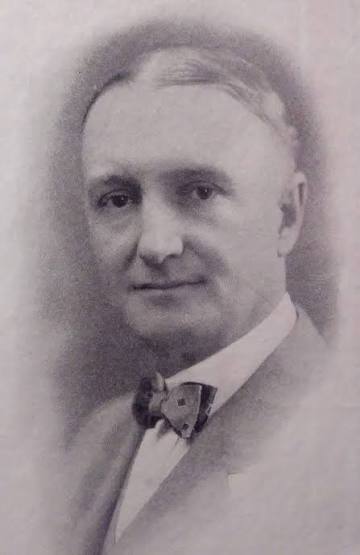
In Loving Memory
Fred Francis Bosworth
"Frederick Francis Bosworth completely changed the direction of his life in 1906 after hosting Charles Parham's prayer meetings, where he experienced a spiritual awakening that turned him from a quiet …"
Life Story
Honoring Their Path
Frederick Francis Bosworth completely changed the direction of his life in 1906 after hosting Charles Parham's prayer meetings, where he experienced a spiritual awakening that turned him from a quiet bandleader into an outspoken evangelist. Abandoning his business pursuits, Bosworth dedicated the next fifty years to traveling the world as a pastor, radio pioneer, and author. Despite surviving deadly illnesses, severe poverty, and violent mob attacks for preaching to Black congregations during the Jim Crow era, he never stopped serving others. His massive revival campaigns and landmark book, "Christ the Healer," brought spiritual comfort and hope for physical recovery to hundreds of thousands of hurting people. He also helped found the Assemblies of God and mentored a new generation of global missionaries before his death in 1958. Today, Bosworth's enduring legacy lives on through the countless lives uplifted by his ministry and his timeless writings on faith.
Life Chapters
The Chapters of Their Story
Faith & Religious Life
FreeFred was raised in a devout Methodist home on the Nebraska prairies, where church attendance and Christian worship shaped his earliest sense of God. At sixteen, while visiting a friend in Omaha, he attended a Methodist revival with a young woman named Maude Green and was converted so joyfully that he laughed aloud until he was embarrassed. Restless afterward, he drifted through odd jobs and wrestled with how to serve God. Around eighteen or nineteen he contracted tuberculosis and was told he would soon die. He traveled to Georgia, where a traveling Methodist evangelist named Mattie Perry prayed for him and he recovered suddenly. Convinced that physical healing belonged to the gospel, he moved his family to Zion City, Illinois, to join John Alexander Dowie's fellowship. There he read Dowie's publication "Leaves of Healing" and became deeply devoted to praying for the afflicted. He held firm convictions about divine healing, holiness, and active Christian service. In September 1906 the Pentecostal pioneer Charles Parham arrived in Zion City preaching a baptism of the Holy Spirit accompanied by speaking in tongues. Because the town's administration opposed Parham and barred him from public halls, Fred opened his own living room for nightly cottage prayer meetings. He felt a deep inner conviction to surrender his business ambitions and obey God completely. On October 18, 1906, while an associate of Parham's taught on praising God in faith, Fred leaped to his feet and spoke in tongues for the first time. The experience turned a quiet, unassuming church bandleader into an urgent, outspoken herald. He immediately felt an overwhelming call to preach and to tell others what he had found. Parham's teaching also gave him a lifelong framework of spiritual gifts, which he practiced daily in private prayer. It also planted the seed of his later scrutiny of Parham's insistence that tongues was the sole evidence of Spirit baptism. Within weeks he abandoned his business pursuits and took a job selling fountain pens simply so he could travel and testify to strangers. In late 1906 he joined his close friend John G. Lake in preaching on the streets of nearby towns like Waukegan, Illinois. In April 1907 he entered full-time vocational ministry alongside Cyrus Fockler in Milwaukee, Wisconsin. He then carried a multi-state revival tour through Indiana, Georgia, South Carolina, and Texas, reaching Dallas in late 1909. In 1910 he founded a congregation there that grew into a major revival center, and in 1912 he hosted extended meetings with evangelist Maria Woodworth-Etter. In 1914 he helped establish the Assemblies of God and served as one of its founding executive directors. When the denomination made tongues the mandatory initial evidence of Spirit baptism, he respectfully resigned in July 1918, published his widely circulated treatise "Do All Speak With Tongues?", and aligned with the Christian and Missionary Alliance, teaching people to trust Scripture for salvation and bodily restoration rather than emotionalism. Eleven years into that work he summarized his position plainly: "After eleven years in the work on Pentecostal lines, during which time it has been my pleasure to see thousands receive the precious Baptism in the Holy Spirit, I am absolutely certain that many do not receive the manifestation of speaking in tongues." He said so because he had watched sincere seekers go home discouraged, and he added that "teaching that tongues is the evidence of the baptism in the Spirit makes it a sign to believers, whereas Paul distinctly says that it is not a sign to the believer, but to the unbeliever."
Final Years & Passing
FreeFred spent his final decade in remarkable service, traveling abroad into his late seventies as a missionary evangelist and senior advisor to younger revivalists, and at seventy-five in 1952 he began a five-year stretch of overseas campaigns that took him to South Africa, Germany, Switzerland, Cuba, and Japan. Even as diabetes, arteriosclerosis, and congestive heart failure wore him down, he prayed daily for strength to finish. In late 1957, after a stroke left his left side paralyzed, he returned to his residence in Miami, where Florence and their four children gathered. During his final weeks he was peaceful and expectant, often telling the family to go on to sleep because that very night might be the one. Shortly before he died of a heart attack on January 23, 1958, he entered a brief comatose state and appeared to greet departed friends and converts, reaching out his arms in recognition. His death certificate recorded a cerebrovascular accident with left-sided hemiparesis and pulmonary edema, along with arteriosclerotic heart disease, three years of congestive heart failure, diabetes, uremia, and possible lung cancer. In a handwritten prayer found in his Bible afterward, he asked God to be the strength of his physical heart for as long as the Lord would let him serve. Days before the end he told an interviewer, "All I have lived for, for the past sixty years, has been the Lord Jesus. And, any minute, I'm looking for Him to walk in the door and go with Him for eternity." Surrounded by his loved ones, his last audible words were a testimony, and among them he kept saying, "Oh, it is so beautiful."
Childhood & Early Life
StandardAvailable with Standard membership
Academic & Education
StandardAvailable with Standard membership
Marriage & Family
StandardAvailable with Standard membership
Achievements & Career
StandardAvailable with Standard membership
Social & Community Life
StandardAvailable with Standard membership
Artistic & Creative Life
StandardAvailable with Standard membership
Ancestry & Heritage
PremiumAvailable with Premium membership
Political & Civic Life
PremiumAvailable with Premium membership
Trials & Resilience
PremiumAvailable with Premium membership
Private Life & Reflections
PremiumAvailable with Premium membership
Offspring & Legacy
PremiumAvailable with Premium membership
Funeral & Memorial Service
PremiumAvailable with Premium membership
Tributes & Remembrances
PremiumAvailable with Premium membership
Life story chaptersStandard+
Unlock all life chapters, the full photo gallery, ancestry tree, and more.
Photo Gallery
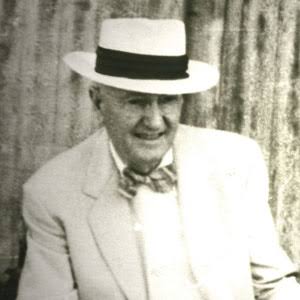
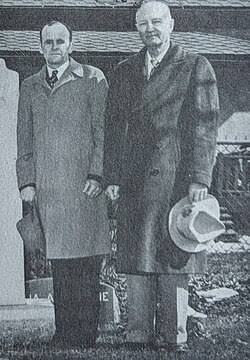
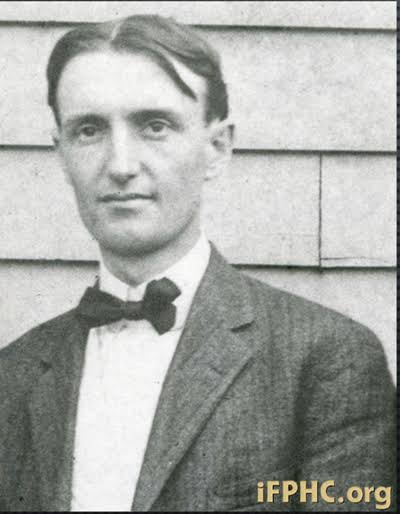
Burial location
Unlock with StandardShare This Memorial
Help others find and honor Fred's memory.
Honor with a Keepsake
Looking for a tangible way to remember Fred? Always In Mind Gifts offers personalized keepsakes, jewelry, urns, and memorial décor — for people and beloved pets.
Browse Memorial Gifts →Tributes & Condolences
Honor Fred
Leave a tribute — a candle, a condolence, or a cherished memory.