

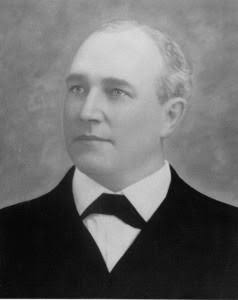
In Loving Memory
Gaston Barnabas Cashwell "Pentecostal Apostle of the South"
"Gaston Barnabas Cashwell traveled across the country in 1906 to the Azusa Street Revival, an experience that forever altered the trajectory of his life and ministry. Before this journey, he was a devo…"
Life Story
Honoring Their Path
Gaston Barnabas Cashwell traveled across the country in 1906 to the Azusa Street Revival, an experience that forever altered the trajectory of his life and ministry. Before this journey, he was a devoted country preacher in eastern North Carolina seeking a deeper spiritual connection. His profound awakening in Los Angeles ignited an evangelistic fire that he brought back to his hometown. Hosting meetings in a local tobacco warehouse, Cashwell sparked a massive revival that drew thousands and reshaped major denominations across the American South. He spent his final years quietly serving his original church and caring for his family. Although he passed away too soon at age fifty-three, his passionate faith left a lasting impact on the religious world.
Life Chapters
The Chapters of Their Story
Faith & Religious Life
FreeGaston was a Methodist preacher before he was anything else, and the shape of his soul was cut by camp meetings, altar rails, and the plainspoken religion of rural North Carolina. In 1885, after hearing the Reverend Kendall preach the Gospel at a revival in his hometown of Keener, he experienced a conversion that turned his life in a new direction, and he dedicated himself to Christian ministry among local Methodist congregations. He soon joined forces with Kendall and with the Reverend Abner Blackmon Crumpler, preaching sanctification by the Holy Spirit across eastern North Carolina, and in 1903 he formally aligned himself with the Holiness Church of North Carolina. Even in the middle of an active and fruitful ministry, a longing grew in him that would not quiet down. He read reports of a spiritual outpouring far away in California and could not stop thinking about them. He wrote to his church conference in November 1906 with a confession that cost him something: "I realize that my life has fallen short of the standard of holiness we preach; but I have repented in my home in Dunn, North Carolina, and I have been restored." In the same letter he declared, "I am unable to be with you at this time, for I am now leaving for Los Angeles, California, where I shall seek for the baptism of the Holy Ghost." He bought a one-way ticket, packed the only suit he owned, and spent six days on the train fasting, weeping, and praying across the whole width of the country. Gaston arrived at the Azusa Street Mission in Los Angeles in late November 1906 and walked into a room that unsettled him. The congregation was radically mixed, Black and white believers worshipping shoulder to shoulder as equals under the leadership of an African American pastor, William J. Seymour. Raised in the strict segregation of the American South, Gaston recoiled, and he withdrew from the mission for several days to fast and wrestle in prayer alone. He came back having decided to lay down his pride, and he asked Seymour and several young African American men to lay their hands on him. Looking back on that turning point, he wrote, "The first altar call I went forward in earnest for my Pentecost. I struggled from Sunday till Thursday." Of what happened next he said, "While seeking in an upstairs room in the Mission, the Lord opened up the windows of heaven and the light of God began to flow over me in such power as never before." He began to speak in tongues, and people standing nearby thought the sounds were German, and he said that "before I knew it, I began to speak in tongues and praise God," while a brother interpreted some of the words as "I love God with all my soul." Before he left for home, Seymour and the congregation quietly took up an offering and bought him a new suit and his return train ticket. Gaston came back to Dunn in December 1906 and did not sit still for a single week. He rented a large local tobacco warehouse and announced a month-long revival crusade to begin on New Year's Eve, December 31, 1906. He sent word through the holiness magazines and invited preachers from the Holiness, Fire-Baptized Holiness, and Free Will Baptist churches by name. Thousands of seekers poured in from across the region, and the meeting became known in history as "Azusa East." Through it he introduced the Pentecostal doctrine of Spirit baptism, with speaking in tongues as the initial evidence, to the Holiness Church of North Carolina. He then set out on an exhausting preaching tour through 1907 and 1908 across Georgia, South Carolina, Alabama, and Tennessee. His tireless evangelism led directly to the acceptance of Pentecostal theology by the Fire-Baptized Holiness Church, the Church of God in Cleveland, Tennessee, and the Pentecostal Free Will Baptist Church. In October 1907, in Atlanta, Georgia, he founded a four-page periodical called "The Bridegroom's Messenger" to unite scattered Southern believers and steady a movement that was spreading faster than anyone could guide it.
Final Years & Passing
FreeGaston stepped back from the leadership of the Pentecostal movement around 1909 and 1910, and his name gradually stopped appearing on the ministerial rosters of the churches he himself had helped to shape. He did not make a spectacle of leaving. He simply went home, reconnected with the religious roots he had started from, and lived out his remaining years as a faithful layperson in the Methodist Church in Clinton and in Dunn. He had never stopped caring about the moral condition of ordinary people, and he still spoke out publicly now and then in support of the temperance and prohibition movements. His health gave way without much warning. In early March 1916, at his own home in Dunn, he suffered a fatal heart attack and died at fifty-three. Years before, he had written to his conference, "I realize that my life has fallen short of the standard of holiness we preach; but I have repented in my home in Dunn, North Carolina, and I have been restored." To the end he was still holding on to that promise, still urging himself and everyone else not to quit early: "Let us not come short of the promise."
Childhood & Early Life
StandardAvailable with Standard membership
Academic & Education
StandardAvailable with Standard membership
Marriage & Family
StandardAvailable with Standard membership
Achievements & Career
StandardAvailable with Standard membership
Social & Community Life
StandardAvailable with Standard membership
Artistic & Creative Life
StandardAvailable with Standard membership
Ancestry & Heritage
PremiumAvailable with Premium membership
Political & Civic Life
PremiumAvailable with Premium membership
Trials & Resilience
PremiumAvailable with Premium membership
Private Life & Reflections
PremiumAvailable with Premium membership
Offspring & Legacy
PremiumAvailable with Premium membership
Funeral & Memorial Service
PremiumAvailable with Premium membership
Tributes & Remembrances
PremiumAvailable with Premium membership
Life story chaptersStandard+
Unlock all life chapters, the full photo gallery, ancestry tree, and more.
Photo Gallery
Burial location
Unlock with StandardShare This Memorial
Help others find and honor Gaston's memory.
Honor with a Keepsake
Looking for a tangible way to remember Gaston? Always In Mind Gifts offers personalized keepsakes, jewelry, urns, and memorial décor — for people and beloved pets.
Browse Memorial Gifts →Tributes & Condolences
Honor Gaston
Leave a tribute — a candle, a condolence, or a cherished memory.