

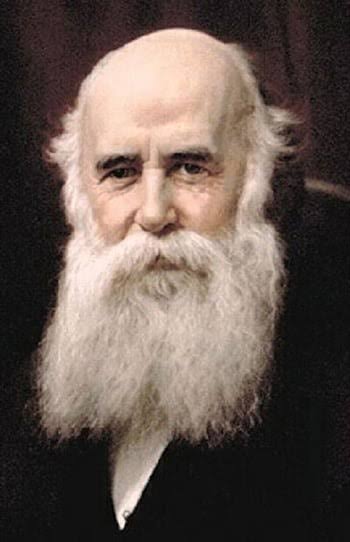
In Loving Memory
John Alexander Dowie "Elijah the Restorer"
"Born into poverty in Scotland, John Alexander Dowie developed an intense religious conviction early in life that propelled him to become a preacher in Australia and eventually travel across continents…"
Life Story
Honoring Their Path
Born into poverty in Scotland, John Alexander Dowie developed an intense religious conviction early in life that propelled him to become a preacher in Australia and eventually travel across continents to share his message of hope. Settling in Chicago, he captivated thousands of followers through his passionate belief in spiritual healing before constructing and ruling an entire religious community along the shores of Lake Michigan. His ambitious leadership and forceful personality not only transformed countless lives but also laid the groundwork for future global religious movements. However, his remarkable rise was ultimately undone when his health deteriorated and his own followers turned against him. At the age of fifty-nine, Dowie died inside the very home he had built, mourned quietly by a small circle of loyal friends while largely forgotten by the broader public. Despite his isolated end, the spiritual movement he pioneered endured, leaving a lasting mark on religious history and influencing millions around the world.
Life Chapters
The Chapters of Their Story
Faith & Religious Life
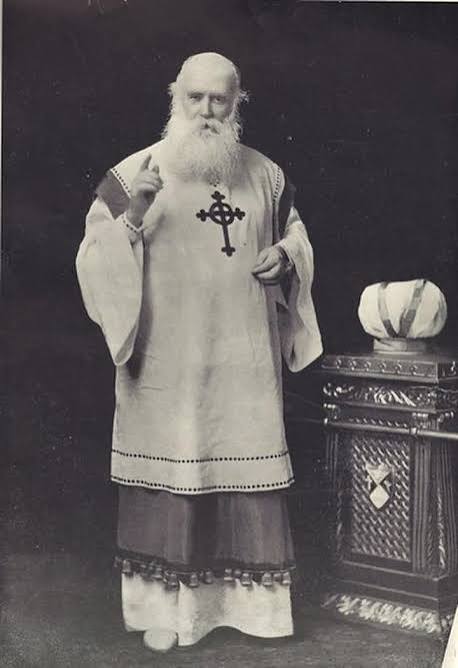
FreeJohn's faith started early and ran hot. He was seven, standing in a street pulpit in Edinburgh, when a lawyer named Henry Wight, who had given up the courts for preaching, lifted him up to sing to the crowd. He sang "Come let us to the Lord our God, with contrite hearts return," and that summer night, within sight of John Knox's doorstep, he gave his heart to Christ. Later he asked his father what his two names meant, and his father sent him to the family Bible to find out for himself. He read there that John meant "by the grace of God" and Alexander meant "a helper of men," and he said, "I will be that by the grace of God." He was baptized, and in time he baptized others by triune immersion, dipping them three times in the name of the Father, the Son, and the Holy Ghost. In 1878 he gave up both his church and his place in the Congregational Union of New South Wales. He had decided that a church should not be buying a preacher's gifts with a salary, and he named his reason as "a holy passion for the misguided, ignorant, uncared for, and perishing thousands." His great turning point came in his study at Newtown, during a fever outbreak that emptied whole houses into graves. Sick at heart after burying more than forty of his own people, he fixed on a verse in Acts. In it he read disease as the devil's work and Christ as the one who undoes it. When he was called to the bed of a dying girl named Mary, he turned on the doctor who murmured that God's ways are mysterious and said, "God's way! How dare you call that God's way of bringing His children home?" He insisted, "No will of God sends such cruelty," and prayed. The fever left her, and she woke up hungry and well. From then on he preached that Jesus is "just the same today." He started the "International Divine Healing Association" in 1886, then the "Christian Catholic Church" in Chicago in 1896, and renamed it the "Christian Catholic Apostolic Church" in 1903. He turned down alcohol, tobacco, pork, oysters, and every kind of medicine, and he opened healing homes where the sick were taught to trust prayer alone. In 1899 he called himself "God's Messenger," and in 1901, before a great crowd, he claimed to be "Elijah the Restorer," the third Elijah, and began to wear high-priestly robes. His followers greeted each other with "Peace to thee," and at nine each morning the power-house whistle blew and the whole city stood still to pray for two minutes. Called to court in 1895 on charges of practicing medicine without a license, he explained himself under oath: "No sir. I do not heal anyone. I do it for the purpose of obeying God, Who uses me in the healings." In the pages of "Leaves of Healing" he set down what his belief rested on: "You do not base your belief that Jesus is the Saviour from sin upon the fact that somebody is saved, or says he is saved; but you base it upon the Word of the living God; and there you stand." He died on March 9, 1907, paralyzed, penniless, and all but alone.
Final Years & Passing
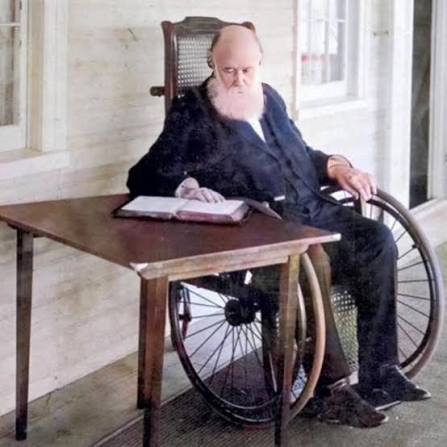
FreeJohn spent his last years quietly inside "Shiloh House," the tall Victorian house on the rise above Lake Michigan. On September 24, 1905, he collapsed with a stroke while speaking in the Shiloh Tabernacle, and he never stood strong again. He went to Mexico to recover and had a second stroke there, which left him partly paralyzed, his left side slack and his speech slow. Even so, he held services every Sunday afternoon in his own parlor, robed as an apostle, speaking to the roughly 350 followers who still came. Only five weeks before the end did those meetings stop. The Friday before he died he seemed no worse. He received a few visitors, prayed over them, and gave no sign that anything had changed. Near midnight one attendant went off duty and another took his place. Shortly before one o'clock on Saturday morning, March 9, 1907, John slipped into delirium and began to preach. He scolded congregations that were not there, told guards to clear out hecklers, and waved his arms as he used to, his old vigor briefly back. The attendant telephoned Judge V. V. Barnes, who reached the house at seven in the morning. Forty minutes later John was gone, with only Barnes and two attendants in the room. Years earlier he had boasted, "I am a stronger man today, in many ways, than I have ever been in my life." On February 10, 1907, a month before the end, he insisted a vindication was coming: "I shall manifest a fresh sign which will contain a great victory. It will be a sign for the whole world and will be wrought by God's hands and from heaven." His last words, spoken as he faded, were, "The millennium has come. I will return in a thousand years."
Childhood & Early Life
StandardAvailable with Standard membership
Academic & Education
StandardAvailable with Standard membership
Marriage & Family
StandardAvailable with Standard membership
Achievements & Career
StandardAvailable with Standard membership
Social & Community Life
StandardAvailable with Standard membership
Artistic & Creative Life
StandardAvailable with Standard membership
Ancestry & Heritage
PremiumAvailable with Premium membership
Political & Civic Life
PremiumAvailable with Premium membership
Trials & Resilience
PremiumAvailable with Premium membership
Private Life & Reflections
PremiumAvailable with Premium membership
Offspring & Legacy
PremiumAvailable with Premium membership
Funeral & Memorial Service
PremiumAvailable with Premium membership
Tributes & Remembrances
PremiumAvailable with Premium membership
Life story chaptersStandard+
Unlock all life chapters, the full photo gallery, ancestry tree, and more.
Photo Gallery
Burial location
Unlock with StandardShare This Memorial
Help others find and honor John's memory.
Honor with a Keepsake
Looking for a tangible way to remember John? Always In Mind Gifts offers personalized keepsakes, jewelry, urns, and memorial décor — for people and beloved pets.
Browse Memorial Gifts →Tributes & Condolences
Honor John
Leave a tribute — a candle, a condolence, or a cherished memory.